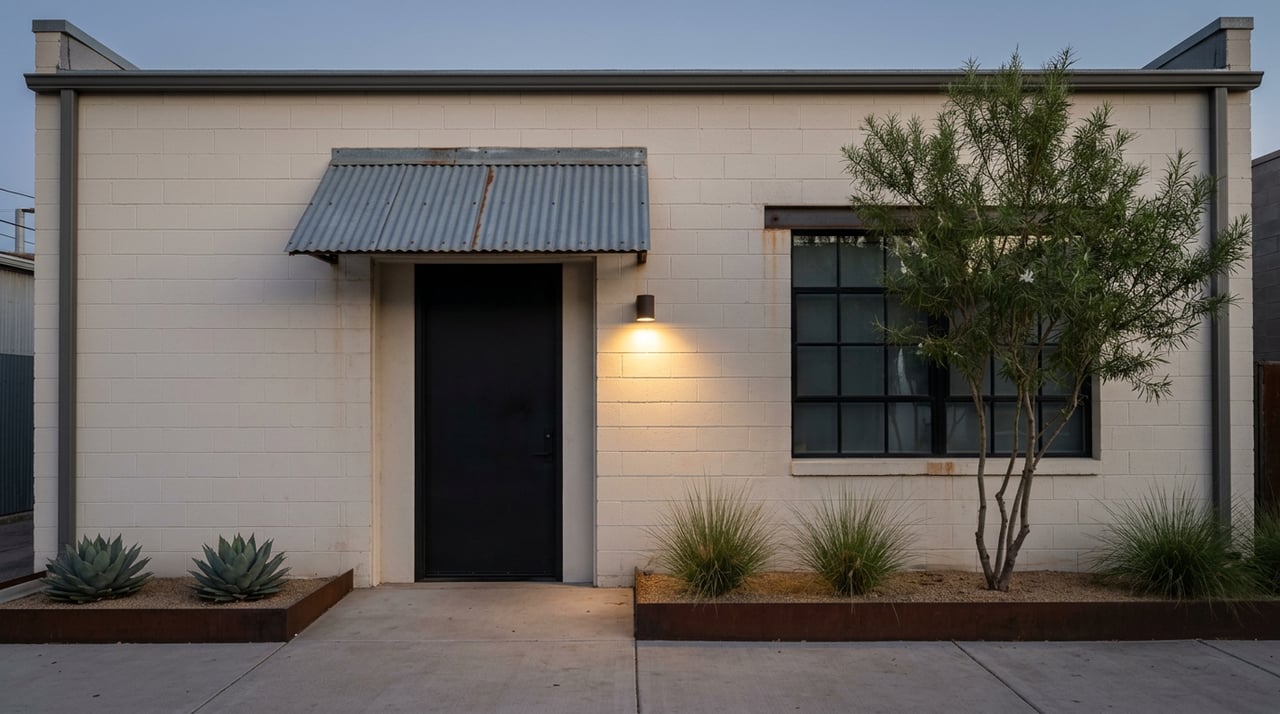
Open the attic hatch in a Huntridge ranch built sometime in the 1950s or 1960s, and there's a decent chance the wire running to the outlets and light switches has a thin silver sheen instead of the dull copper most people expect. Look closer at the jacket and you might find the letters "AL" stamped into the plastic. That single detail, easy to miss, easy to photograph over during a listing shoot, is the kind of thing that decides whether a Nevada home sale closes without incident or ends up in a dispute six months after the new owners move in.
Sellers in Las Vegas's older neighborhoods spend a lot of energy worrying about the wrong line item. They've heard about special assessments that haunt buyers in newer master-planned communities and assume something similar is lurking in their own paperwork. Meanwhile the actual risk sitting in their attic, under their slab, or behind three checkboxes on a state form gets almost no attention at all.
The Box That Isn't Really A Box
Nevada is what's known as a disclosure state. Before a residential sale can close, the seller has to complete the Seller's Real Property Disclosure form, officially Form 547, issued by the Nevada Real Estate Division under NRS 113.130. It asks for a plain answer, Yes, No, or Unknown, on the condition of the home's electrical, plumbing, heating, cooling, and structural systems.
The part that catches people off guard isn't the length of the form. It's what "No" actually means once it's signed. Under Nevada law, checking "No" next to a defect question is a legal statement that you're certain the problem doesn't exist, not a guess or a shrug. If a buyer later discovers a defect you should have known about and the box said "No," NRS 113.150 allows for treble damages, meaning a $10,000 repair can turn into a $30,000-plus judgment plus attorney's fees. The form only asks about what a seller is actually aware of, so an honest "Unknown" carries no such exposure. The statute doesn't punish uncertainty. It punishes false certainty.
For a seller of a 1960s Beverly Green or John S. Park home, this changes the calculation entirely. The instinct is to check "No" on anything you haven't personally had trouble with, because "Unknown" feels like it might scare off a buyer. In practice, the opposite is true. A seller who checks "Unknown" on a system they genuinely haven't tested is protected. A seller who checks "No" on a system they never actually inspected is exposed the moment a buyer's inspector finds otherwise.
What Your Build Year Actually Tells An Inspector
Vintage Las Vegas neighborhoods carry specific mechanical fingerprints depending on when they went up. Huntridge was largely built through the 1950s to 1970s as one of the city's first suburban developments. John S. Park splits into two distinct pockets, Period Revival cottages from the 1930s and 1940s and ranch homes from the 1940s and 1950s. Beverly Green went up in the 1950s and 1960s with custom designs, some from the architectural firm of Walter Zick and Harris Sharp, the pair behind the Moulin Rouge and Mint Hotel. Each of those windows lines up almost exactly with a known plumbing or electrical material that fell out of favor for a reason.
| Build Era | System | What It Looks Like | Why It Trips Up Sellers |
|---|---|---|---|
| Before 1970 | Galvanized steel pipe | Gray, magnetic, often corroded from the inside out | Zinc coating erodes around the 60-year mark, causing discolored water and restricted flow that a home inspector will catch even if the seller never noticed low pressure |
| 1965 to 1975 | Aluminum branch wiring | "AL" stamped on the wire jacket at outlets, switches, or the panel | Connections loosen and oxidize over decades, a known fire-risk pattern that electricians flag immediately during a pre-listing walkthrough |
| 1978 to 1997 | Polybutylene pipe | Gray or black plastic supply lines, often behind walls or under slabs | Shows up in homes with additions or plumbing repairs from that window, even if the original structure predates it, and it was the subject of a class-action settlement over cracking and failure |
None of these defects are dealbreakers on their own. What makes them a disclosure problem is that they're invisible during a normal walkthrough and easy to answer "No" about simply because nobody's ever mentioned them. A seller who's lived in a Huntridge cottage for twenty years without an electrical incident isn't lying by checking "No" on wiring problems. They're guessing, and guessing is exactly what the form isn't built to protect.
The Assessment That Usually Isn't There
Here's where a lot of generic seller advice for Las Vegas gets it backwards. Special Improvement District and Local Improvement District assessments, known locally as SIDs and LIDs, get a lot of attention because they can add thousands of dollars to a buyer's closing costs in newer master-planned communities. Developers in Summerlin and parts of Henderson used these financing tools to front the cost of roads, sewers, and streetlights, then passed the balance to homeowners through the property tax bill.
Those assessments largely trace back to the rapid growth of the late 1990s and 2000s. Huntridge, John S. Park, and Beverly Green were fully built out decades before that financing structure became common in the valley. A seller in one of these older infill neighborhoods spending time worrying about an SID or LID balance is usually solving a problem that doesn't apply to their parcel. The actual risk in these neighborhoods sits in the plumbing and the panel box, not the tax bill.
That doesn't mean the SID/LID conversation never applies here. Verifying it takes five minutes with the county assessor's parcel records, and it's worth ruling out rather than assuming. But the disproportionate attention it gets, relative to how rarely it actually shows up on a 1950s parcel, is itself a sign of how disclosure advice gets copied from newer-construction contexts into older ones where it doesn't fit.
Why This Matters More In Today's Market
The countywide single-family median sat at $480,000 in July 2026, flat against July 2025, with roughly 8,192 active listings and about 5.0 months of supply across Las Vegas, North Las Vegas, and Henderson. That's the highest supply level the valley has carried since 2019, and it changes the leverage math for a seller who has a disclosure surprise land mid-escrow.
In a tighter market, a buyer who finds aluminum wiring during inspection might absorb the cost to keep a deal alive because the next house on their list has three other offers on it. With five months of supply, that same buyer has real alternatives. A late-discovered defect is more likely to trigger a price renegotiation, a credit demand, or a walked deal entirely, because the buyer isn't afraid of losing the house to someone else. Getting the disclosure right the first time, before a buyer's inspector finds it for you, matters more in a market with this much choice than it did during the tighter years right after the pandemic.
FAQ
Does checking "Unknown" instead of "No" make my listing look risky to buyers? Not in practice. Buyers and their agents see "Unknown" regularly on older homes, and it reads as honest rather than evasive. What actually damages trust is a "No" that gets contradicted by an inspection report two weeks later.
My home was remodeled in the 1990s. Does that clear the era-specific risk? Only for the parts that were actually replaced. A kitchen remodel doesn't necessarily mean the original galvanized supply line to the water heater was swapped out, and a room addition from the polybutylene era can introduce a completely different plumbing risk into an otherwise older home. Renovation history should be treated system by system, not as a blanket reset.
Do I need to hire an electrician or plumber before I even list? It's not required, but a short pre-listing check of the panel and any accessible supply lines gives you something concrete to write on the disclosure form instead of a guess. Nevada's form only asks what you know, so knowing more before you sign it protects you rather than creating new problems to disclose.
Selling a home built decades ago in a neighborhood like Huntridge, John S. Park, or Beverly Green means the paperwork carries more weight than the price sign in the yard. Flat Fee Pros helps Las Vegas Valley sellers work through exactly this kind of disclosure detail as part of a full-service $1,999 listing, without a percentage-based commission eating into what these older homes have quietly built in equity. If you're getting ready to list a vintage Las Vegas property, Flat Fee Pros can walk through what your specific build year actually means for your disclosure form before a buyer's inspector tells you first.